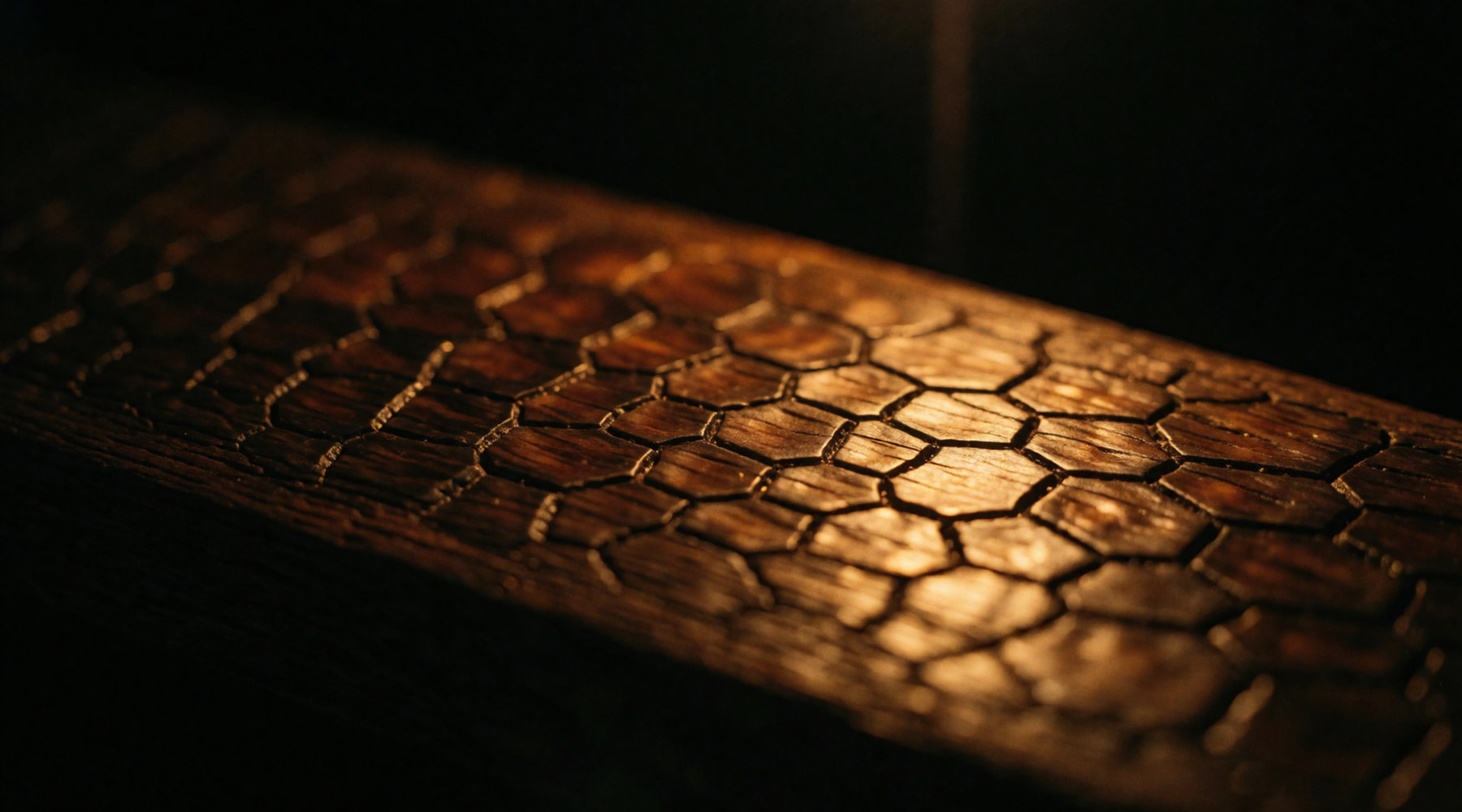
A barrel yard in Kentucky is stacked with white oak that has never held anything. The staves were dried outdoors for months, bent into a barrel with heat, then charred on the inside until the surface blisters and cracks. The deepest of those chars has a name, alligator, for the way the blackened wood breaks into scales. Every one of those barrels will be filled with bourbon once and never again. That is not a house preference. The requirement sits in the federal standards of identity, in the same paragraph as the grain and the proof.
A style is what a group of producers ended up doing, and it can be argued with. Bourbon cannot. Bourbon is a specification published by the American federal government, and it reads like one: at least 51 percent corn in the mash, distilled no higher than 160 proof, filled into wood no higher than 125, bottled at 80 or above, and stored in charred new oak. Rye is the same document with the grain swapped, at least 51 percent rye. None of it is a matter of taste. Every clause is a number or a material.
Charring is not seasoning the wood. It is rebuilding it. The flame breaks the oak's lignin down into vanillin, the compound behind the smell of vanilla, and caramelises the wood sugars into a thin band sitting under the black. Coopers call that band the red layer. Most of what a bourbon tastes like comes out of it. The char above it works as a filter, taking sulphur out of the spirit as the seasons drive it into the wood and back. A refill barrel has already handed most of that over to whatever it held before. New oak has handed over nothing, and a spirit filled into it will carry more of the barrel than most drinkers expect from something they think of as grain.
The grain thresholds are looser than they sound. A rye at 51 percent and a rye at 95 percent carry the same word on the label and taste nothing alike. The law is also silent on Kentucky. Bourbon can be made in any American state, though the word and the state have travelled together long enough that people hear one and assume the other. Tennessee added a clause to its own state law in 2013: bourbon's specification, made in the state, and then the new spirit filtered through sugar maple charcoal before it ever reaches a barrel. That one extra step is the whole of the difference, and it was enough to earn the liquid a name of its own.
There is a fourth category and it argues with the other three. Corn whiskey needs 80 percent corn, and the law will not let it near charred new oak at all: aged, it goes into a barrel already used, or into new oak left uncharred. It is the one of the four a collector is least likely to own. Take the char away and what is left is grain, alcohol and whatever the still did with them, which is a real whiskey and a far less forgiving one to make. Corn whiskey is the only one of the four where the rule about wood is there to keep the wood out.
A specification does not make a whiskey good, and plenty of bourbon made exactly to it is dull. What the rule guarantees is not quality. It is that the barrel gets used once and then leaves. Those barrels go to Scotland, Ireland, Japan and Sweden, and much of the world's malt spends its life in wood American law would not let anyone fill twice. A rule written about corn and oak in one country set the default flavour of whisky in most of the others. That was nobody's plan.
The colour of a straight bourbon is the whole argument, and nothing was added to make it. That amber came out of a fire set inside a barrel before the spirit arrived, and out of the summers that followed. The wood gave it once. Then the barrel went abroad to give away what was left.