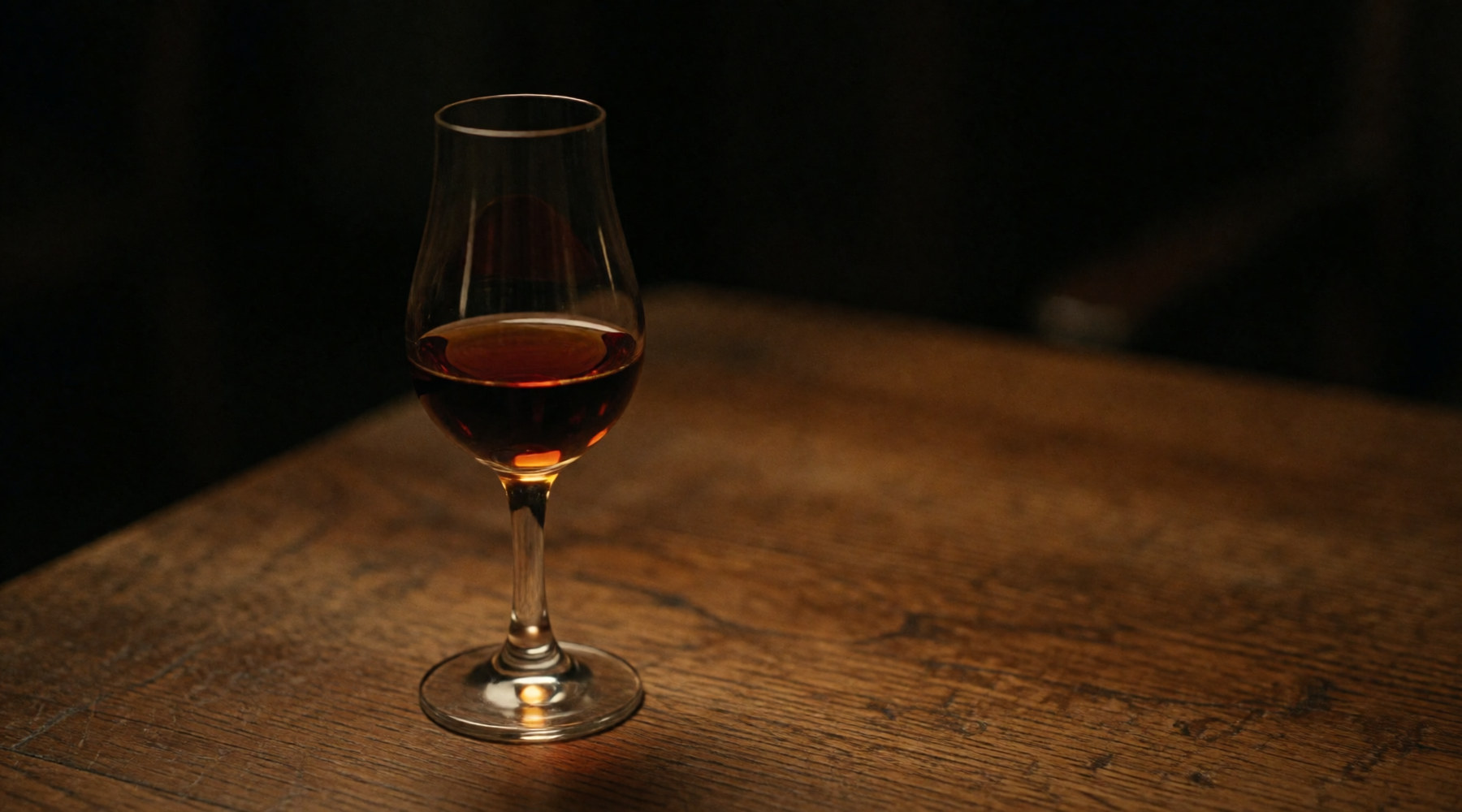
A chemistry student from a family of sake brewers arrived in Glasgow at the end of the First World War and spent two years writing things down. Masataka Taketsuru worked in Speyside and then in Campbeltown, filling notebooks with mash bills, still dimensions and fermentation times, and sailed home in 1920 with a Scottish wife and a document no Japanese company had. Shinjiro Torii hired him. In 1923 they broke ground at Yamazaki.
What he brought back was a method, and the method worked. Japanese malt distilling has used imported barley, Scottish still shapes and Scottish maturation logic from the start, and has never pretended otherwise. One part of the Scottish system did not survive the crossing. In Scotland a distillery's character is a currency: houses fill casks for one another and swap them, so a blender who needs twenty flavours can buy nineteen. Japanese companies did not trade, and still largely do not. Suntory does not sell to Nikka. Whatever a blender in Osaka needs, the company has to make.
That is an engineering problem, and the answer is visible in the stillhouse. A Scottish distillery usually runs one pair of stills in one shape and makes one spirit. Yamazaki and Hakushu run banks of stills in different shapes and sizes, no two pairs alike, feeding several spirits into several woods on one site. Nikka runs Yoichi and Miyagikyo as opposites: coal-fired direct heat and a heavy spirit in Hokkaido, taller stills and a lighter one outside Sendai. None of that is reverence for craft. When the twenty flavours a blender needs all have to come off sites the same company owns, the company builds twenty ways of making spirit.
The wood makes the same point. Mizunara, the Japanese oak now used as shorthand for the whole category, entered the industry as a substitute. European and American casks were not to be had in the war years, so distillers used what grew at home, and what grew at home was difficult timber: porous, prone to leaking, awkward to work and slow to give anything back. It took decades in cask before it stopped tasting like a compromise. The incense note everyone looks for now began as a shortage that lasted long enough to turn into a habit, and the habit outlived the reason for it.
The reckoning came through prizes. Japanese bottlings started winning at British competitions in the early 2000s, and demand ran into a wall built twenty years earlier. Through the domestic slump of the late eighties and nineties, when whisky lost the Japanese drinker to other categories, the houses cut production. Stock is a decision taken a decade before anyone needs it. New capacity does not fill a gap already in the warehouse. In 2018 Suntory withdrew age-stated bottlings, Hibiki 17 among them, and gave the plain reason. The mature stock was not there.
What filled the gap is where this story gets awkward. For most of the boom, Japanese law had nothing to say about what could be called Japanese whisky. Spirit distilled elsewhere could be shipped in, blended, bottled in Japan and sold as Japanese. That was not fraud. It was legal, some producers did it, and the label did not have to say so. In 2021 the industry's own trade body published a standard: mashed, fermented, distilled and matured in Japan, three years in wood, bottled in Japan. It is voluntary, and it binds only its signatories. It was still the first line anyone had drawn.
Seven names, for a century of work. Two Suntory malts and the blend they both feed. Two Nikka distilleries built to contradict each other, and the label that blends them. Chichibu, distilling since 2008 at a fraction of their scale. Every one was assembled from the inside out, because there was never anyone to buy the missing part from. What Scotland spreads across dozens of companies, Japan had to build inside a handful, and every stillhouse on the list still shows it.